
When it comes to something as ancient as wine, there are bound to be quite a few myths and legends. Around the world, people have been fascinated by this (literally) intoxicating beverage.
At Z&M, we love a good story–stop by our Leavenworth winery or Lawrence vineyard and share yours! We love meeting new folks and swapping stories, especially when they’re as Twisted as ours.
Let’s take a look at some of the popular and lesser-known wine myths and legends.
Wine Myths & Legends: Grapes

You wouldn’t think the humble grape could inspire so many tall tales. And yet, this indispensable wine ingredient has been the catalyst for quite a few.
The TL;DR version? Grapes all pretty much come from France.
Okay, not really (but a lot of the legendary ones sure seem to).
MYTH: SHIRAZ GRAPES COME FROM IRAN
This one seems reasonable, since there is an Iranian city called Shiraz. However, there are multiple stories about the origins of this grape–commonly associated with France and Australia.
These romantic tales involve adventuring knights and soldiers returning to France with Persian grapes. In reality, Syrah is as French as Emanuel Macron, Pepe LePew, or Maurice Chevalier.
MYTH: CRUSADERS BROUGHT US CHARDONNAY
According to the mythology, Crusading knights developed a taste for these grapes in Lebanon and brought it back to Europe. In reality, however, it’s also originally from France!
MYTH: PINOT GRIS GRAPES ARE ORIGINALLY FROM HUNGARY
The fairy tale goes that an Austrian general brought the grapes back to the Alsace. In another version, Holy Roman Emperor Charles IV was a big fan.
Ultimately, as with most myths and legends, the reality is quite different. Pinot Gris grapes are from–you guessed it–France!
Vin Santo–Holy Wine
“What,” you may be wondering to yourself, “on earth is holy wine? Is it like communion wine?”
Well, technically, no. It’s a sweet Italian dessert wine, primarily found in Tuscany. The name, Vin (or Vino) Santo, literally means “holy wine.”
So, what’s the deal?
Unfortunately, we can’t promise that drinking Vin Santo will make you holy. But there are some thoroughly entertaining stories around this delicious after-dinner treat!
Here are a couple myths and legends about Vin Santo.
In one story, priests would use leftover communion wine made from the white Malvasia and Trebbiano grapes grown by monks to treat plague victims. Legend has it, the result was miraculous healings!
According to another legend, Vin Santo has its origins in the 15th century Council of Florence. This ecumenical council was intended to unite the Roman Catholic and Orthodox Churches (stay with us, we won’t let it get too boring).
Of course, there was much with which the two religions’ leaders disagreed. However, they could both agree the wine served during the council was top notch–even virtuous–hence, the name Vin Santo.
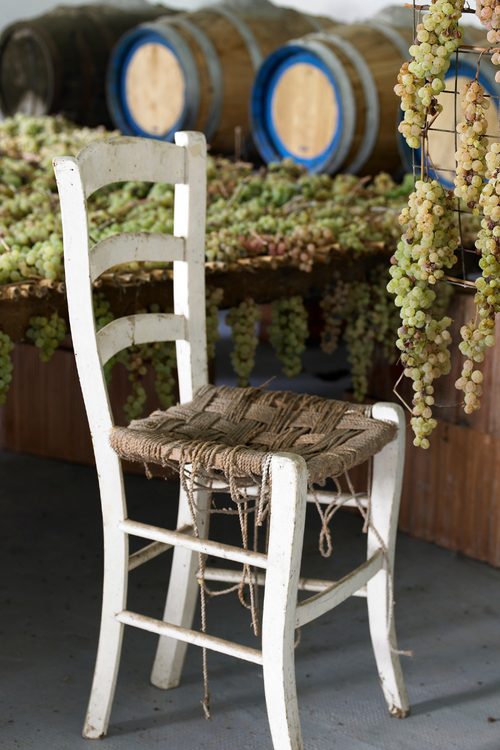
This particular sweet wine goes through a unique production process. First, the grapes themselves undergo a lengthy aging process to dry out and therefore sweeten. Their desiccation can take months after harvest, depending on how sweet the winemakers desire the final product.
The fermentation and maturation also takes quite a long time after the grapes are pressed. Vin Santo is aged in old barrels in an environment that is not temperature controlled. This leaves the wine at the mercy of the changing seasons and temperatures.
Leftover yeast particles (the wine lees) from previous Vin Santo yields are left in the barrels during the aging process, which can take two to three years.
Ancient Legends About Wine
The ancient world brings us a host of myths and legends about fermented grape juice.
The Epic of Gilgamesh tells us that we have a woman to thank for wine. When a member of the king’s harem suffered from migraines, she tried drinking poison to put herself out of her misery.
Fortunately for us (and for her), the jar of grapes thought to have gone bad and declared unsafe wasn’t lethal. Far from being the poison she thought it was, it was actually delicious!
You guessed it–she had discovered wine.
The first mention of a goddess of wine was in what is today modern Iraq around 3000 BCE. Other ancient societies and cultures from then on had wine goddesses. Since feminine deities tended to be linked with agriculture and fertility, this tends to make sense.
The Egyptians, Sumerians, and the peoples of the Indus Valley all had wine goddesses. Egyptians also had a wine god, Osiris, who was also the god of the underworld. Together with his wife, Isis, the two taught humans how to grow grapes and make wine.
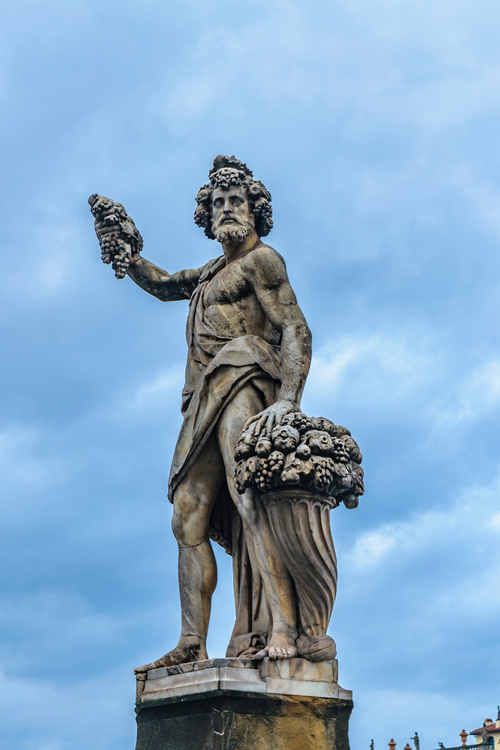
However, it was the Greeks who introduced the iconic wine god Dionysus in 500 BCE. Not to be outdone, the Romans produced their own wine deity: Bacchus.
Bacchus had kind of a weird mnemonic device to help mortals remember not to drink too much. It’s a long story for a lesson that is fairly self-evident to most people who have ever had a drink.
Essentially, Bacchus held that if you drink in moderation, you’ll be happy and cheerful like a chirping bird. If you start to go past the bounds of your tolerance, you begin to act like a lion, getting into trouble. People who drink entirely too much become like donkeys, acting stupidly.
Skip the Myths and Legends and Come to Z&M for the Real Thing
Many of our wines are brand new–dreamed up right here in-house and made into a reality using local Kansas produce. However, we enjoy a nod to history and tradition.
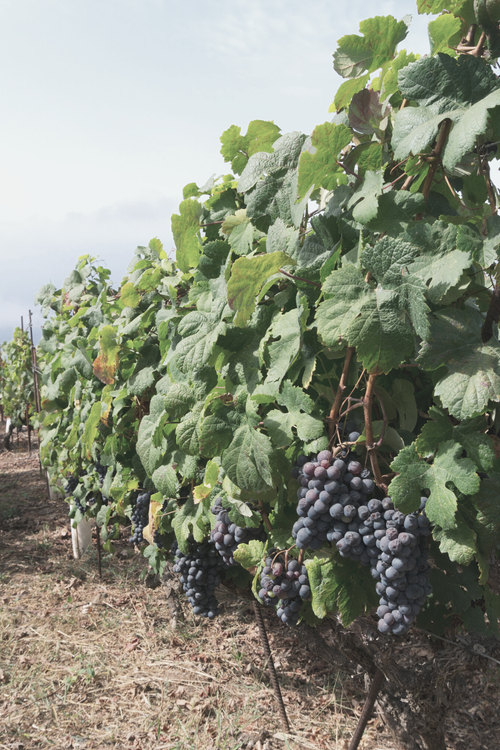
For example, our Harvest Moon white wine incorporates Old World winemaking secrets from Gina’s family in Sicily.
Come by our Leavenworth winery or our Lawrence vineyard for a tasting! We love to show off the way we’ve combined time-honored methods with a uniquely Kansas Twist.
Not a fan of traditional wines? We’ve got HellFire Jalapeno Wines, Watermelon Wine, Autumn Fall Apple Wine–and more!
So whether you’re looking for something wholly original or something with ancient roots, we’ve got you covered.