
Coffee shops are big business in the US; so are wineries. Don’t worry, we’ll get into the economics of coffee and wine, but first – coffee wine.
That’s right, we said coffee wine – stop by Z&M for a tasting of our Blacked Out Coffee Wines!
AMERICANS LOVE COFFEE SHOPS – ALMOST AS MUCH AS THEY LOVE WINE

According to the National Coffee Association (NCA), in 2015, Americans spent $74.2 billion on coffee. On top of that figure, they attributed nearly 2 million American jobs to the coffee industry.
That’s a lot of money, and a lot of coffee. Take the statistics from the previous year for example. In an NCA survey of people over the age of 13, 63 percent of respondents drank coffee the day before.
And that’s just Americans. Globally, people drank around 160 million 130+ pound bags of coffee between 2016 and 2017. That’s 160 million bags that each weigh over 130 pounds.
It’s safe to say people are obsessed with coffee. What about wine? After all, as a winery, this ancient fermented grape beverage is our bread and butter (so to speak).
Well, to put it simply, wine is doing just fine. In 2018, Americans drank 966 million gallons of wine. That includes sparkling wines, dessert wines – pretty much all the different wine varieties.
That same year, 17 percent of Sonoma State University survey respondents reported buying their wine at wine tasting rooms. Moreover, 11 percent said they bought wine online Almost Always or Often. People seem to prefer to buy their wine in person, but remote wine buying may be growing in popularity.
WHAT’S SO GREAT ABOUT COFFEE?
Coffee shops aside, just what is it people love so much about coffee? Let’s take a look into the history of coffee and how it became such a beloved beverage around the world.
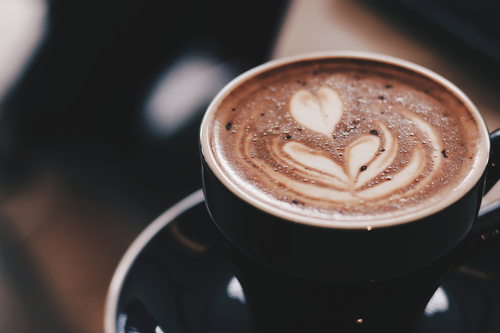
The little brown bean has an interesting background that even its biggest fans may not know. Ethiopian legend attributes the discovery of coffee to a goat herder named Kaldi. Kaldi noticed his goats were particularly energetic after eating some mysterious red fruit from a shrub.
So, he sampled some and noticed he got something of a buzz himself. In something of a chain reaction, some local monks noticed Kaldi and his goats and tried some coffee fruit. The monastery was up all night.
Of course, we know caffeine was responsible for perking up the goats, their keeper, and an entire monastic community. But did you know that caffeine is actually a pesticide? Coffee plants produce it in their fruit as a natural protection against insects.
Early Uses of Coffee Beans and Fruit
Now, we know coffee arrives in our homes and at coffee shops in bean form. However, the fact is coffee begins in the form of the red fruit that first attracted Kaldi and his goats. The familiar coffee bean appears in the center of this cherry-like fruit.
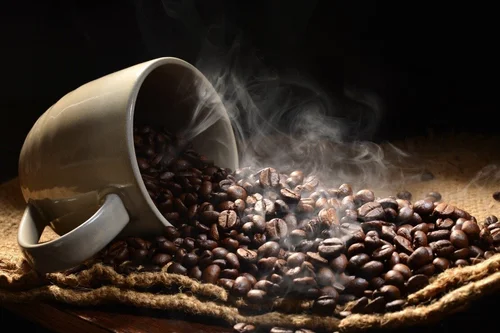
Initially, people were more attracted to the fruit. Early peoples made a protein-rich snack out of coffee fruit by mixing it with animal fat.
Some people even made an early coffee wine, by fermenting the pulp of the coffee fruit. In 1000 AD, there was a drink using the coffee fruit in its entirety: beans, hull, and all.
The 13th century is when people started roasting coffee beans, the preliminary coffee-making step to this day. Muslim populations in Arabia at that time appreciated coffee’s ability to fuel lengthy prayer sessions through its caffeine content.
Popular tradition maintains that coffee was non-existent outside of the Arabian or African worlds before the 17th century. According to this tradition, the father of modern European coffee is a Hajj pilgrim from India named Baba Budan. He strapped some fertile coffee beans to his abdomen (why not?), headed home from Mecca, and the rest is history.
The European Coffee Trade Begins (Followed by the American One)
Dutch settlers in Sri Lanka, then Ceylon, then Java began planting and harvesting coffee in the early 17th century. The French, Spanish, and Portuguese weren’t far behind. This legacy persists in the numerous coffee shops one sees around Paris to this day!
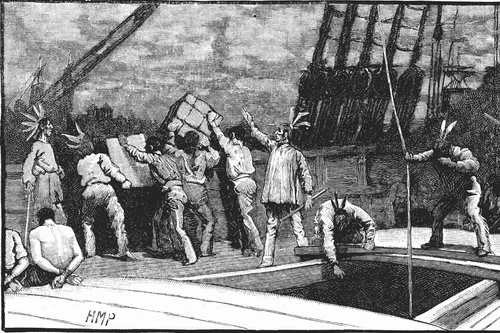
While coffee existed in the American Colonies in the 18th century, it didn’t pick up steam for a while. The coffee-drinking craze began after a little event called the Boston Tea Party in 1773. All of a sudden,
tea was out and coffee was in.
Coffee was ubiquitous and a global staple by the late 19th century. That’s when names like Folger and Maxwell House began to gain household status.
COFFEE AND WINE BELONG TOGETHER
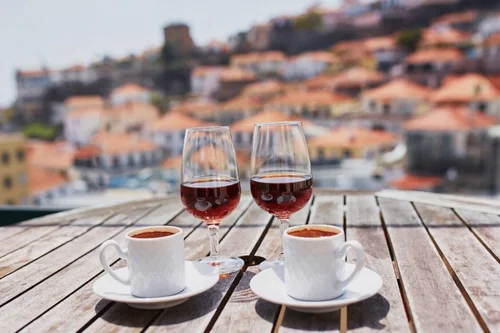
Aside from being popular drinks with centuries-old histories, wine and coffee belong together. You may have seen articles on the health benefits of coffee, as well as on the health benefits of wine. Studies have shown that these two beverages may have similar advantages: things like improved longevity and improved blood flow.
However, you may want to take these findings with a grain of salt (not literally, though). Who knows if coffee and wine will make you some kind of immortal superman or woman?
What we can tell you is that coffee and wine are both delicious beverages that invite savoring and connoisseurship. They are also ideal drinks to bring people together. It only makes sense to combine them into one delectable cocktail with a complex flavor that’s greater than the sum of its parts.
Z&M BLACKED OUT COFFEE WINES
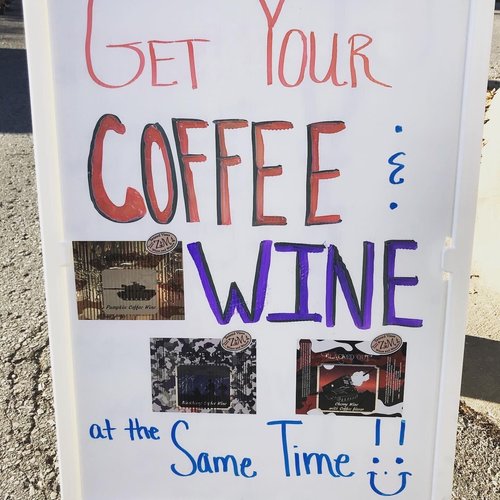
Of course, there’s no shortage of coffee shops in Leavenworth. We even partner with one of them, a fellow veteran-owned business, Burr Roasters.
If you’re looking for an innovative brunch cocktail or dessert wine that will keep your guests talking, we’ve got you. Stop by our Leavenworth winery or our vineyard in Lawrence, KS for a tasting of our Blacked Out Coffee Wines.
Our seasonal drink, La Befana, is a fennel coffee wine tribute to Gina’s Sicilian heritage and the region’s Christmas traditions. Pick up a bottle just because, or for the holidays. In Leavenworth or Lawrence, whichever you choose, we’d love to see you!