
When is the most wonderful time of the year? People commonly answer something along the lines that it’s when snow covers the ground, lights twinkle on trees, and little one wait for presents from Jolly Old St. Nick.

For wineries, the answer is a little different. At a vineyard, “the most wonderful time of the year” is springtime–specifically, something called “bud break.”
Come visit our Lawrence vineyard to see real-life viticulture in action, and to sample some truly original Twisted Wine.LEARN MORE ABOUT OUR VINEYARD
What is “bud break”?
Contrary to the way it sounds, it’s not hitting “pause” to enjoy a beer.
Throughout the winter, grapevines lay dormant. They aren’t much to look at without grapes and leaves, but they are storing energy in their roots and trunks. As springtime arrives, days get longer and warmer, and the grapevines draw on that energy to produce the first green leaves of the season.
When these new little leaves show up, it’s showtime. The grapevines no longer need to rely on their energy – they can now produce leaves that can feed them and produce energy using photosynthesis.
You remember photosynthesis from grade school, right? Plants absorb the sun’s light using the chlorophyll that makes them so luscious and green. It lives in chloroplasts, the leaves’ structures that convert the sunlight into something called ATP that converts the sunlight into sugar and other organic compounds that the plant uses for food.
So, as early as mid-February and throughout the spring into late April (depending on the grape varietal and the climate), these leaves pop out, taking the sunlight to produce food to make more leaves all over the vineyard. Bud break!
The impact of weather and climate
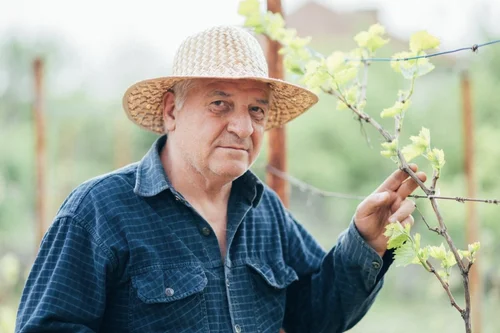
During bud break, you want the weather to be mild: not too warm, and not too cold. Vineyards have ways of circulating warm air to the grapevines to keep them healthy during the spring, avoiding heavy winds.
It’s the first stage in what’s known as the vine cycle. The culmination of this cycle occurs in the fall, when the grapes are ready to harvest.
Different hemispheres and regions experience bud break differently. While here in the Northern Hemisphere it occurs in the timeframe we mentioned earlier (as early as mid-February, and as late as mid-April), in the Southern Hemisphere things happen differently. In Australia, bud break is a winter phenomenon.
Another condition that can affect bud break is the type of soil in the vineyard. Rocky soil tends to be better for warming and heat regulation than clay soil.
The process of bud break
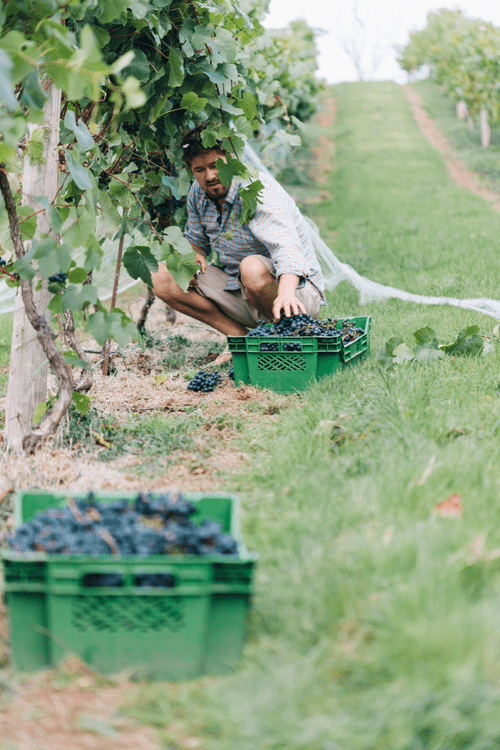
Vines spend the tail-end of winter and very beginning of spring circulating sap. When you bend or nick a branch and see sap emerge, it’s a sign that bud break is imminent. You usually need a good streak of several 50 degree Fahrenheit days for conditions to be right for bud break.
When the vines sense the warming temperatures and increased rainfall, it sends a signal. The small, hard bumps on the branches are the dormant buds. As they sense the increased light, heat, and moisture, they turn into the soft, fuzzy buds we associate with springtime.
Those little fuzz balls turn into grape leaves into shoots that can grow as much as an inch a day.
The Vine Cycle
Now that you understand bud break, let’s take a look at where it belongs in the vine cycle. The vine cycle, you remember, is the total process from beginning to end (and beginning again) that grows the grapes that ultimately wind up in your wine glass.
- Winter Pruning
- Bud Break
- Flowering
- Fruit Set
- Canopy Management
- Crop Thinning
- Veraison
- Harvest
- Crush
- Fermentation
- Aging
- Bottling
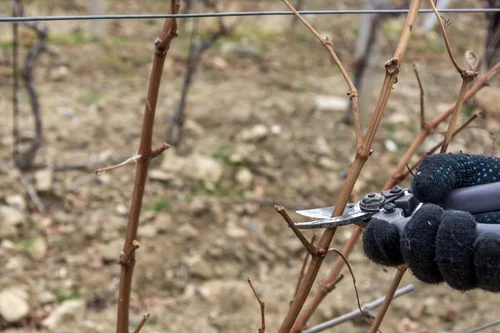
First comes pruning, a high-skill practice where workers clip and trim grape vines, intending to guide them specific directions and for certain purposes. Then, your vineyard is ready for bud break (which by now you should understand thoroughly, come on). Flowering is the step that follows a couple months later, where tiny flowers grow in tight bunches on the vine.
These delicate flowers need to be shielded from the elements, especially frost and wind. But the ones that survive turn into grapes, and it’s time for fruit set. That’s when the pollinated flowers shed their petals and tiny little grapes start to appear.
That’s when the intricate dance of canopy management begins. According to Napa Vintners, this is “[a] complex process,” which includes “a variety of decisions and actions related to leaf removal, vigor management, shoot thinning and shoot positioning. The goal is to achieve the perfect balance of shade, sunlight and air circulation around each grape bunch, which will promote optimal ripening.”
Crop thinning and veraison follow canopy management. Crop thinning is also known as green harvesting. It’s when unripe grape bunches that don’t seem to be developing evenly are removed from the vineyard. Just like babies’ eye, skin, or hair color can change as they grow and develop, all grapes begin green, but can change their color as they mature. This process is called veraison, and usually sometime in the summer, a layman or woman could confidently identify a red or white varietal.
The process that follows: harvest, crushing the grapes, fermentation and aging, and finally bottling, is a subject for another blog post.
Enjoy the changing seasons at Z&M
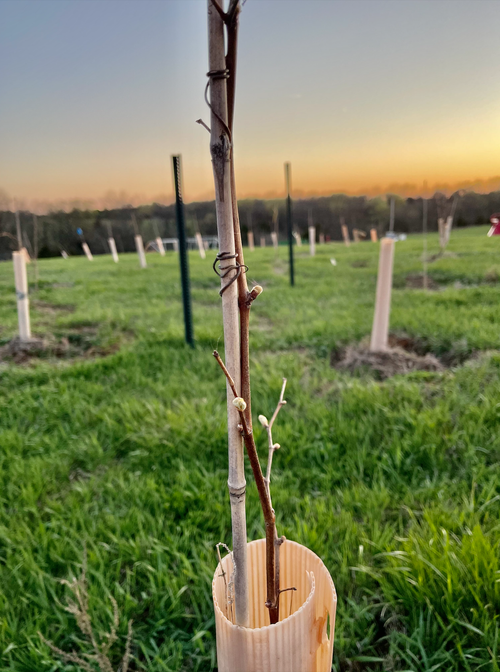
One of the best things about wine (aside from, you know, the wine), is the way it connects you with nature. It’s a tremendous privilege to cultivate and harvest the bounty of this planet where we’re lucky enough to live, work, and play.
If you want to reconnect with nature, be a part of the community and land around you, and enjoy a glass of wine while you’re at it, stop by our Lawrence vineyard. Whether it’s bud break, a Twisted hot Kansas summer, or harvest, there’s always something to see and do at Z&M.RESERVE A TASTING
Sources:
https://blog.jordanwinery.com/what-is-bud-break/
https://www.ducksters.com/science/photosynthesis.php
https://vinepair.com/wine-blog/understanding-the-magic-of-bud-break/
https://napavintners.com/napa_valley/life_cycle_of_a_grape.asp