

It’s no secret that Z&M is proud of the Italian heritage of co-founder Gina Montalbano (the “M” in Z&M). The daughter of Sicilian immigrants Salvatore and Antoinette, tributes to Gina’s roots are all around: from our Harvest Moon wine made from an old family recipe, to our menu . Our Leavenworth winery and Lawrence vineyard offer a variety of traditional Italian food to enjoy with your Twisted Wine.
Come check us out at either location and try some yourself!
Italian food is one of the most popular national cuisines in the US. As we approach the popular Italian American holiday of St. Joseph’s Day, here’s a history of the dishes that will cover many families’ tables on March 19th.
The History of Italian Food, The Early Years
Contrary to what many people might imagine, Italians haven’t been eating pizza and spaghetti since the dawn of time.
Ancient Rome
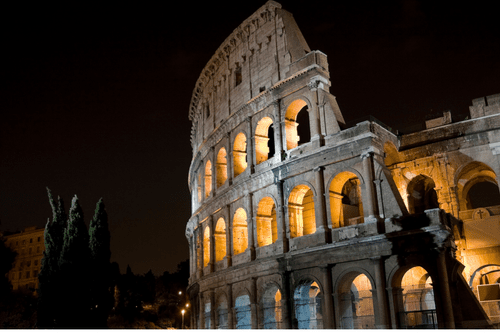
Italians’ ancestors were the Romans, who were big fans of a good banquet. These festive meals were more than a dinner party with friends and neighbors, but a chance to sample new foods and dishes.
The vastness of the Roman Empire meant Romans had access to exotic ingredients from all over the known world. That meant in addition to seafood from the nearby Mediterranean, a Roman table could include spices from imperial territories in the Middle East and grains from North Africa’s fertile plains. cereals from the fertile plains of North Africa.
An affluent Roman banquet might include roasted ostrich meat and other game, seasoned with fish sauces, and paired with red wine, which they mixed with honey and water.
Now, more average Romans enjoyed an early version of what we’d call today the Mediterranean Diet, famous for its health benefits. Their meals were simpler, featuring the healthy fats found in olive oil, as well as bread, legumes, and vegetables.
After the Fall
A sort of cultural exchange happened when a series of Barbarian invasions (along with a few other factors) set in motion the fall of Rome.
The invaders, who mostly hailed from Germanic countries and further north in Europe, introduced the Romans to butter and beer. For their part, the Romans gave them a taste for wine and olive oil.
How’s that for a silver lining?
Medieval Times (The Historical Era, Not the Dinner and Show)

Gina’s family’s home island of Sicily had a different experience of the Middle Ages than the peninsula of Italy. In the 9th century, Arab invaders turned Sicily into a colony. The colonizers introduced spices and dried fruit to the Sicilian people, which to this day are prominent features of Sicilian cuisine.
The Arabs also brought pasta to Sicily.
As a seafaring people, the fact that pasta could be stored dry made it an asset on long voyages. Arab influence in Sicily is also where marzipan got its start, through the introduction of the almond. Sicilian cuisine staples sugar, orange, and lemon also find their origins in its Arab colonial past.
An additional sweet treat that Italians may be able to thank the Sicilians for is gelato. The Arabs brought fruit sorbets to the island, which is the earliest ancestor of today’s popular Italian ice cream.
The Renaissance
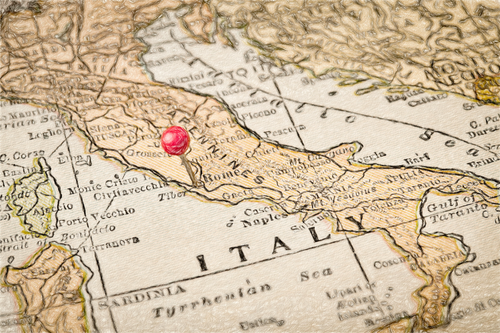
Among the things Italy is famous for is the Italian Renaissance. This revolution of thought, science, philosophy, and art also had an impact on cuisine of Italy’s various regions.
In Tuscany, where the Medici family reigned over the region’s politics and culture from Florence, cooks in powerful families refined ways of making bread, wine, cheese, and preparing meats like lamb.
Elsewhere, in the port city of Venice, imports of sugar and spice made Venice the sweets capital of Italy. Candied fruit gained in popularity as a result of the sugar craze, and it was during the Renaissance that the iconic Italian desserts of panettone and panforte were invented.
The age of exploration that occurred during the Renaissance brought in other ingredients that we commonly associate with Italian cuisine. Most notably was the arrival of the tomato from South America, sometime around the 1500s.
History of Pizza and Pasta
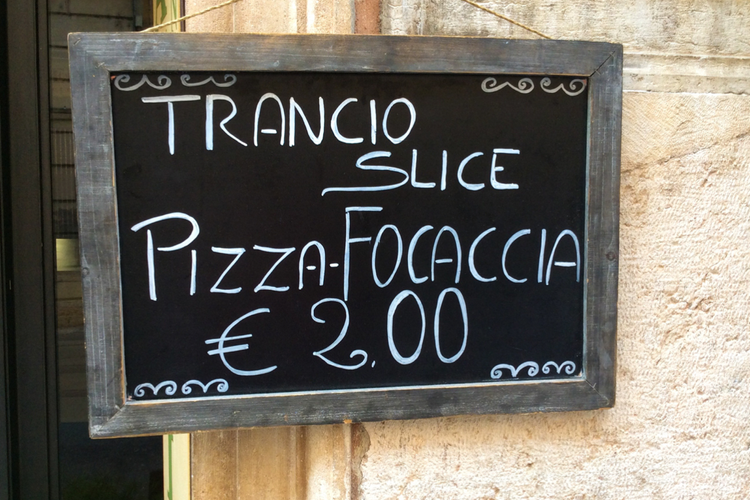
Now, when most people think about Italian cuisine, they think of pizza and pasta. But if you did some quick math, you probably realized that since tomatoes are a fairly recent arrival in Italy, pizza and pasta as we know them were probably only possible in the past few centuries.
Pizza
While putting toppings on flatbread has a long history going back to ancient times, modern pizza comes from Naples.
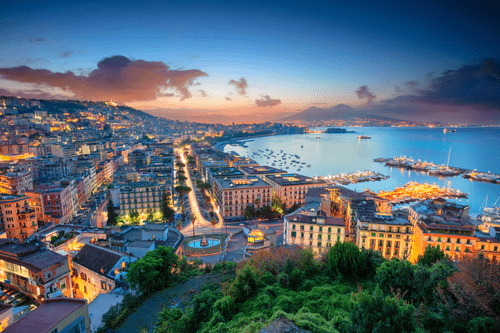
It was essentially invented as fast food for the poor manual laborers of the busy port city in the 18th and 19th century. As a result, it had kind of a stigma about it at first. That is, until Italy’s disparate city states and regions united as a country in the mid-19th century, and the King and Queen paid a visit to Naples.
Interested in slumming it with some local cuisine, they tried pizza, and the rest is history.
Today, pizza making is no joke. Gina has many close family relatives in Naples, where Neapolitan pizza is its own regional style. She even has cousins that have gone to pizza-making college!
Pasta
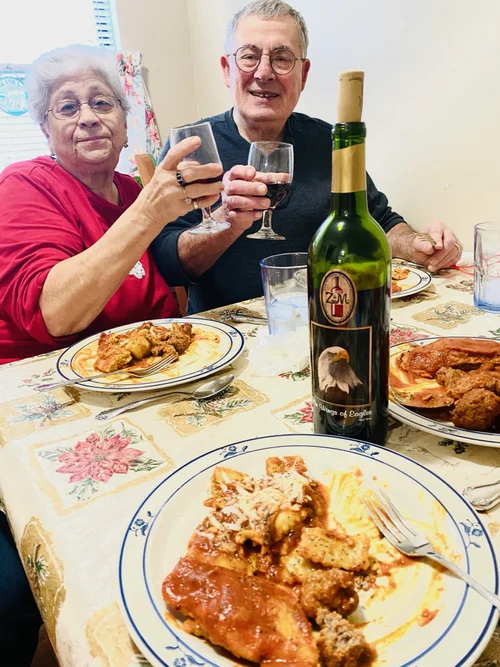
The Mediterranean developed the pasta flour we think of today, adapting the Arab import by using durum wheat as the main ingredient. Durum wheat has a long shelf life and a high gluten content, and when dry, the resulting pasta can last quite a while, making it affordable and versatile.
These features soon made it a staple of Italian cuisine.
A Bit of Italy in Kansas

Salvatore and Antoinette taught Gina the best secrets and traditions of making Italian and Sicilian dishes. If you’re interested in experiencing a taste of Italy in the heartland, come visit us in Lawrence and Leavenworth!
We offer a menu full of sweet and savory treats that are sure to hit the spot.
Can’t join us in person? Order some Twisted Wine delivered right to your door, including our Sicilian-inspired Harvest Moon or our seasonal tribute to Italian holiday legend, La Befana Coffee Wine.
Mangia!Italian foodhistory of Italian foodItalian food in LeavenworthItalian food in LawrencewineryKansas wineryItalian food near meItalian food near Kansas CityItalyFood and Wine