
Once Christmas decorations are put away, it’s common to look for the next exciting thing on the calendar. Store displays start to fill up with hearts, Cupids, and candy–Valentine’s Day is on its way! If you’re curious about this iconic February holiday, we’ve got some fun facts about Valentine’s Day to share with you, so read on.
Shop Z&M and add some romance any time of year, whether it’s with a bottle of Twisted wine or Bella Vino soap, scrubs, lip care, or candles!
What is the real story of Valentine’s Day?
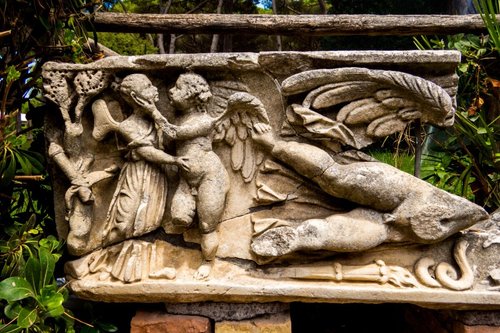
The origins of this holiday are pretty surprising, and are actually fairly ancient. Here’s how we ended up with what is sometimes unfairly categorized as a celebration invented by greeting card companies. Prepare for some truly shocking history!
WHEN IN ROME
Let’s start in Ancient Rome and the feast of Lupercalia. Traditionally, this festival was observed between February 13th and 15th (sound familiar?).
It is believed this mysterious rite took its name from Lupercus, a Roman fertility god. Another theory is that it honored the she-wolf who, according to Rome’s foundational myth, nursed its twin founders Remus and Romulus.
This fertility celebration might look pretty strange to most modern eyes. “The Bachelor” Final Rose ceremony, this was not. First, the men would sacrifice goats and dogs. Then, they would whip women with the pelts of the animals in the belief it would make them fertile.
This was all voluntarily–the women would actually line up for this treatment.
Things got pretty rowdy, apparently. Another feature of Lupercalia included a kind of matchmaking-by-lottery, when young men would pull girls’ names out of a jar. The resulting couple were stuck with each other for all of Lupercalia, sometimes after if they really hit it off.
THE CATHOLIC ORIGINS OF VALENTINE’S DAY
Valentine’s Day is a Roman holiday, through-and-through. After the arrival of Christianity, many believers of the new religion faced persecution. On two different years during the 3rd century BCE, Emperor Claudius II had at least two different men named Valentine executed. Somewhat implausibly, both executions took place on February 14th.
Although the details are somewhat murky, it is believed Valentine was a Christian who was martyred for his faith. There are two separate legends associated with the man the Catholic Church recognizes as St. Valentine. One is that he was jailed for secretly performing Christian marriages.
Another story about St. Valentine is that while imprisoned, he befriended the jail keeper’s daughter. Before his execution, it is said he left her a letter, which he signed, “From your Valentine.”
The associations with love and the feast day of St. Valentine’s occurrence during the traditional Lupercalia celebrations seemed a natural fit.
Modern Valentine’s Day traditions

Clearly, we don’t go around smacking each other with bloody animal pelts on Valentine’s Day anymore. Most of us don’t head to church that day, either.
So how did our traditional associations of Valentine’s Day with sentimental cards, candy, and romantic dinners start?
MEDIEVAL AND RENAISSANCE EUROPE
It appears that the 14th century in England and France is where our present-day traditions begin. There was a popular belief at the time that February 14th was the start of mating season for birds. For evidence, we have a line from a 1382 poem by English poet Geoffrey Chaucer: “For this was on St. Valentine’s Day, when every bird cometh there to choose his mate.”
Apparently, this was enough to launch a popular holiday that would endure for centuries.
The 15th century, however, is when we have the first recorded example of a valentine being sent. A French nobleman sent a note to his wife from the Tower of London, addressing her as, “My very gentle Valentine.”
17th century France gave us the custom of giving flowers on February 14th. The “language of flowers,” with each flower having a symbolic meaning, had recently come to Europe from Persia, after a visit there by the King of Sweden. Roses, for example, signified love.
FAST FORWARD TO THE 19TH CENTURY
By the mid-1800s, mass-produced valentine cards were starting to hit the market in the US. It was also around this time that the famous heart-shaped chocolate boxes made their appearance.
Richard Cadbury, son of the Cadbury chocolate company founder, pioneered chocolate boxes. In 1861, he debuted the heart-shaped version we know and love today! This time period was really a heyday for Valentine’s Day traditions, since it’s also when candy hearts with messages began, courtesy of the New England Confectionery Company (NECCO).
Valentine’s Day in the 21st Century
Today, Valentine’s Day is still big business. Here are some Valentine’s Day facts by the numbers:
- 8 billion conversation hearts manufactured annually
- 6 million couples (on average) get engaged on February 14th
- 36 million heart-shaped boxes (coming to 58 million pounds of chocolate!) are bought and sold each year
- In 2020, people spent $5.8 billion on jewelry, and $4.3 billion on date night
Let Z&M Take Care of Valentine’s Day This Year
If you’re not sure what to do this year, whether it’s an evening out or staying close to home, Z&M’s got you covered.
Why not make a date of one of our Vineyard or Leavenworth events? Or, order Bella Vino soaps, scrubs, lip care, or candles to give as a gift to a special wine lover in your life?

Finally, if you and your sweetheart are opting for a romantic evening in, order Z&M Twisted Wines shipped right to your door.
This year, don’t take your valentine for granted! As a veteran-owned business, we know what it’s like to be apart from those you love. That means we also know how important it is when you’re able to spend special days with your loved ones.
It’s why we’re always ready to go the extra mile when it comes to bringing people together over good wine and good times.